This spring, USA Today's 10Best readers picked Palisade as the best small town in the entire western United States, beating out Breckenridge, Astoria, Oregon, and Solvang, California. Around the same time, the town broke ground on a multimillion-dollar roundabout at Highway 6 and Elberta Avenue and started construction on a $16 million sewer line consolidation with Clifton Sanitation District. By every outside signal, this should be the year Palisade homes fly off the market.
They didn't. Over the three months ending May 2026, the median home sale price in Palisade actually slipped 4.8 percent from the same window a year earlier, homes took roughly twice as long to sell, and fewer of them sold at all. That gap between the headlines and the transaction data is worth sitting with if you're comparing Palisade to anywhere else in the Grand Valley right now, because the reason for it has nothing to do with demand drying up and everything to do with what "a Palisade home" actually means.
What Actually Happened This Year
The USA Today win wasn't a fluke or a marketing stunt. It came after an expert panel nominated 20 small towns across the West, and readers voted Palisade to the top spot, citing the peaches, the wine, and the recreation that define the place. A town official quoted by the Grand Junction Daily Sentinel said he expected the recognition to bring more visitors who'd never heard of the town before.
At the same time, the Colorado Department of Transportation started reshaping the Highway 6 corridor through the middle of town. Construction on the new roundabout at Elberta Avenue began in late January 2026, a week later than originally planned because of extended utility work, and CDOT's early estimate put the construction cost at $7.1 million. The work runs directly past Palisade High School and through the block that includes Grand Valley Bank and Palisade Pharmacy, with the frontage roads being reconfigured into one-way paths alongside new sidewalks. As of the town's own July 2026 capital projects update, the project is expected to wrap up around January 2027, which means it ran straight through this year's Peach Festival in August and will still be underway heading into next year. Local businesses along the corridor have stayed open through construction, but foot traffic and drive-by visibility on that stretch look different than they did a year ago.
Layer on the sewer consolidation project, and the picture is a town in the middle of the kind of infrastructure investment that usually shows up in a real estate pitch deck as a reason to buy now.
Then Look at What the Listings Are Actually Doing
None of that shows up in the sales numbers. In the three months ending May 2026, Palisade's median sale price came in at $500,000, down 4.8 percent from the same stretch the year before. Homes averaged 45 days on the market, compared to 23 days a year earlier. In May 2026 specifically, only 10 homes sold, down from 17 in May 2025.
The one number moving the other direction is price per square foot, which rose 17 percent to $336 over that same window. A falling median paired with a rising per-square-foot price sounds contradictory until you remember that a median doesn't describe a typical house. It describes the middle of whatever got sold that quarter, and in a town where the same search returns a two-bedroom bungalow two blocks from Main Street and a six-bedroom home on 34 acres with mountain views, the middle can move for reasons that have nothing to do with either property losing value.
Two Very Different Products Wearing One Median
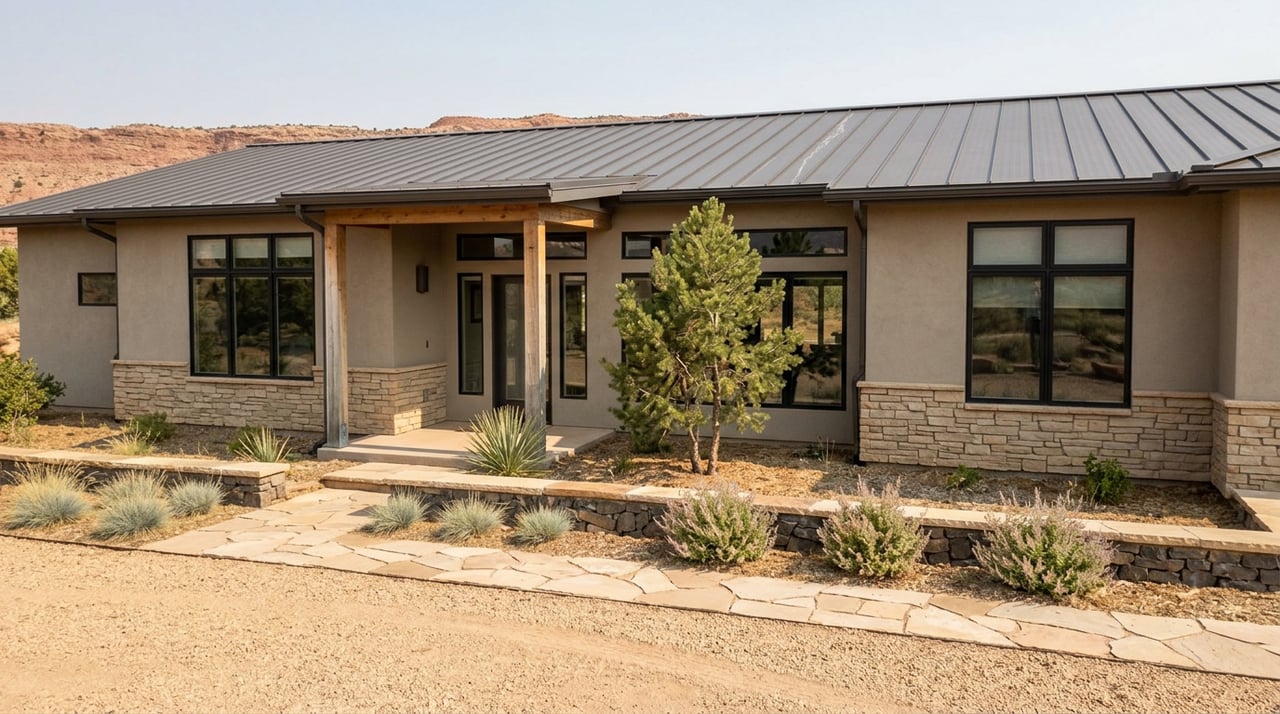
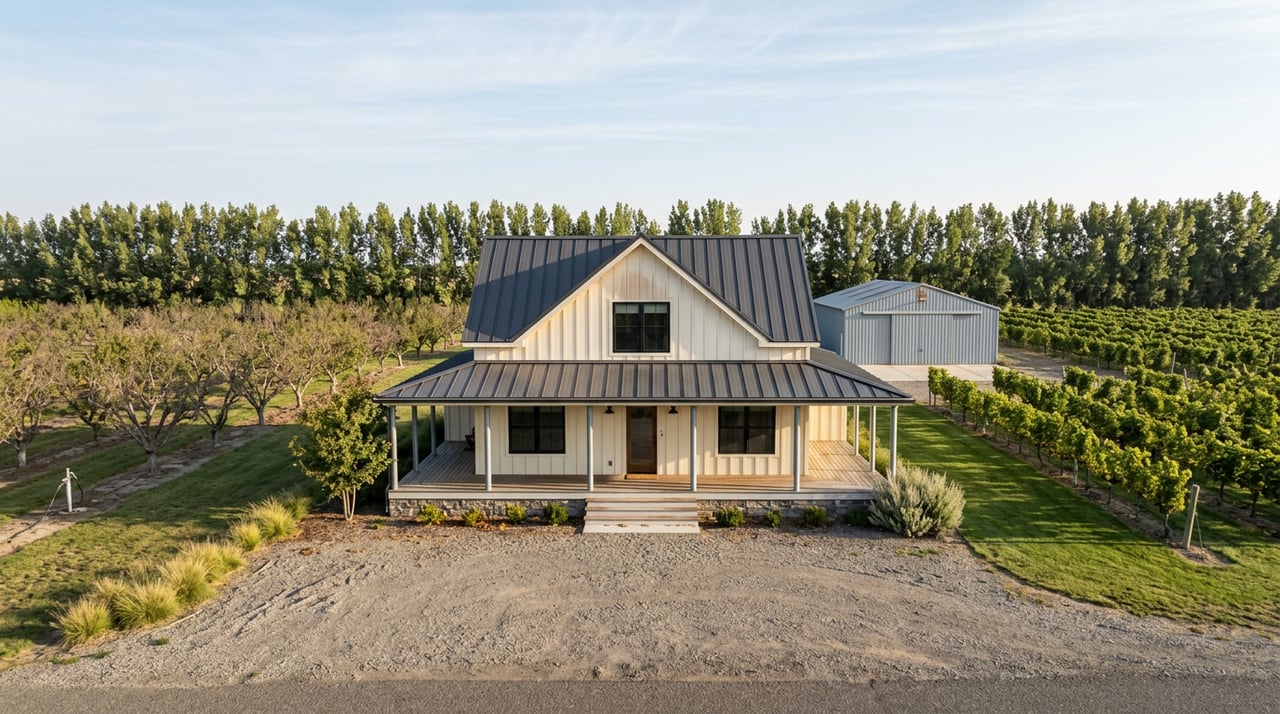
Here's the clue that matters most. Current listing data puts the average size of an active Palisade home listing above 4,200 square feet, nearly double Mesa County's overall average. That doesn't mean the typical Palisade home is a mansion. It means "Palisade" as a search category includes everything from a 1,400-square-foot in-town cottage to a custom home with a shop and a barn sitting on irrigated acreage, and averaging those together produces a number that describes no actual house anyone is buying.
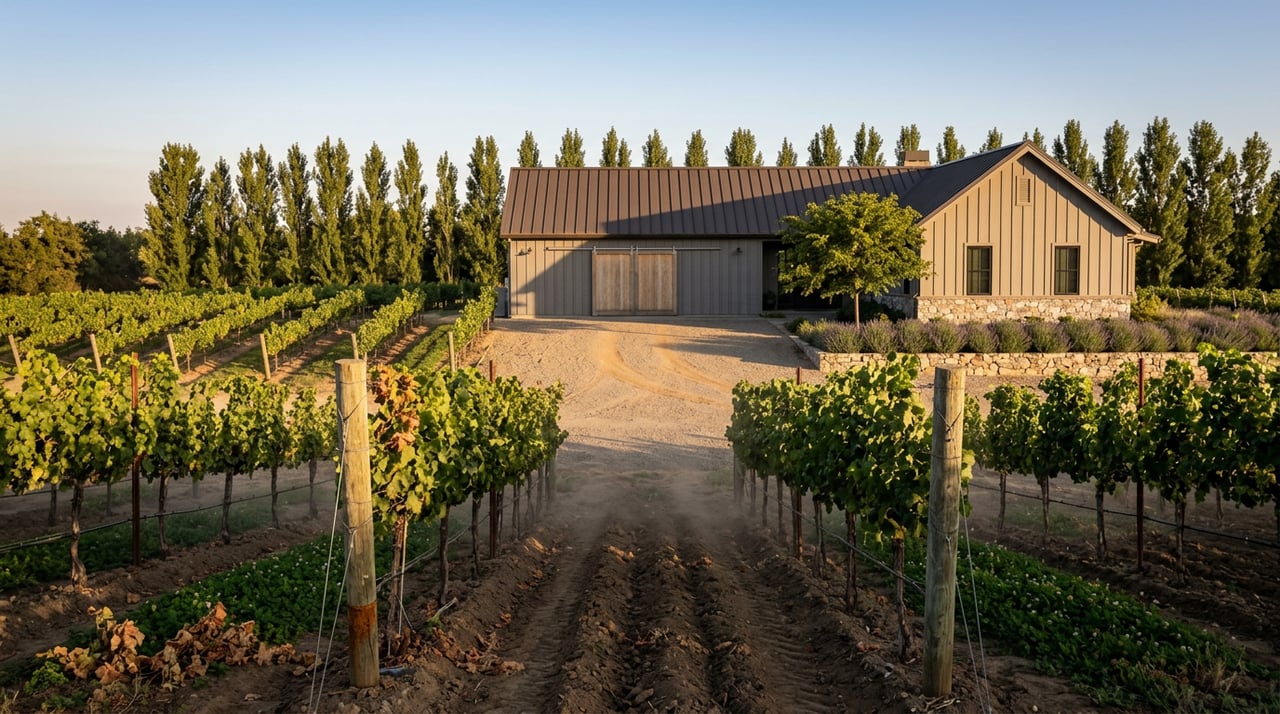
Land pricing tells the same story from a different angle. Right now, the handful of vineyards listed near Palisade average roughly $188,000 an acre, reflecting established vines, water infrastructure, and often a working winery on-site. A nearby parcel marketed for its development potential rather than as an established, producing vineyard has listed closer to $43,000 an acre. Same town, same general geography, more than a fourfold difference, because the number was never really about the dirt. It's about what's growing on it and what water rights come attached.
| What's for sale | What actually sets the price | What can add weeks to closing |
|---|---|---|
| In-town home (bungalow, updated ranch) | Square footage, condition, proximity to Main Street | Standard inspection and financing timeline |
| Irrigated acreage, orchard, or vineyard parcel | Water rights, irrigation shares, soil history, outbuildings | Confirming irrigation district paperwork, verifying shares transfer with the deed, sometimes a separate water title search |
When a market blends these two products into one median and one average days-on-market figure, a slow quarter for acreage sales can drag the whole town's numbers down even while in-town homes are moving at a completely normal pace, and vice versa.
The Line Item That Doesn't Show Up in "Days on Market"
This is the part that a national travel award and a road project can't touch. Buying an irrigated parcel in Palisade or on East Orchard Mesa means confirming that the irrigation shares are actually transferable with the property, checking which ditch company or irrigation district the land sits in, and sometimes running a water rights title search that's separate from the standard property title work. None of that exists on a typical in-town home sale. It's not a red flag when it comes up. It's simply part of what a land purchase requires, and it takes real calendar time to do properly.
A 45-day average across the whole town isn't telling you every house is stuck. It's blending fast in-town closings with slower acreage closings that are working through exactly this kind of paperwork, and the acreage side of that blend is where a national recognition and a road project have zero influence on the timeline.
What the Roundabout Actually Changes
The Elberta Avenue project is a real, time-bound factor, just not the main one. With construction running along the Highway 6 corridor through at least the rest of this year and into early 2027, in-town properties directly on that stretch may see different drive-by visibility and foot traffic during active work hours than they would in a typical year. That's worth factoring into a showing schedule or a pricing conversation if a listing sits inside the construction zone. It's a temporary condition tied to a specific, published timeline, not a signal about the broader Palisade market.
What This Means If You're Comparing Palisade to Somewhere Else
If you're cross-shopping Palisade against Redlands, Fruita, or Grand Junction using median price and days on market alone, you're comparing a blended number in Palisade against numbers from towns with more uniform housing stock. That's not a fair comparison unless you ask what's actually inside the sample.
A few questions worth asking before you draw conclusions from any Palisade listing sheet or market snapshot:
- Is this median built mostly from in-town sales, acreage sales, or an even mix this quarter?
- If I'm looking at acreage or a vineyard parcel, have the irrigation shares and water rights been confirmed as transferable, and by whom?
- Does the listing sit inside the Highway 6 construction zone, and if so, has that affected recent showing traffic?
- What did comparable in-town homes actually close at recently, separate from any large-acreage sales in the same data set?
None of this means Palisade is cooling off. It means the town's real estate market is two markets sharing one zip code, and a slower average says more about which product sold that quarter than about how badly either one is wanted.
If you're weighing a move to Palisade, whether that's a bungalow near Main Street or acreage with vines already in the ground, I'd rather walk you through what the water rights and irrigation paperwork actually look like before you fall in love with a listing than after. Laura Black can help you figure out which side of this market you're really shopping. Schedule a Consultation whenever you're ready to talk specifics.