If you pulled listing data on the Redlands in January 2026, you'd have seen two numbers that shouldn't be able to coexist. The median sale price in the Redlands Mesa golf-course pocket of the neighborhood had dropped 22.6 percent from a year earlier, landing at $1.1 million. In the same report, covering the same homes, the price per square foot had climbed 80.6 percent to $448. A market can't be simultaneously getting cheaper and more expensive per square foot unless something else is going on underneath the number.
Something else is going on. And it isn't a story about the Redlands losing value or gaining it. It's a story about what happens when you try to describe two different housing products with one median.
One Zip Code, Two Different Housing Stocks
The Redlands sits in Grand Junction's 81507 zip code, and as of June 2026 its median home price was $725,000, with an average sale price of $719,420. Compare that to Grand Junction as a whole, where the median sale price for the three months ending in May 2026 was $429,000, up 4.7 percent year over year on 377 homes sold that month. The Redlands is running roughly 69 percent above the city median, which is the kind of gap that gets a neighborhood a reputation.
But that gap isn't evenly distributed across the Redlands. It's produced almost entirely by one type of product pulling the average up while a completely different type of product anchors the lower end. Treat "the Redlands" as a single price tier and you'll misprice a listing in either direction, depending on which half of the neighborhood you're actually standing in.
The Golf Course Product
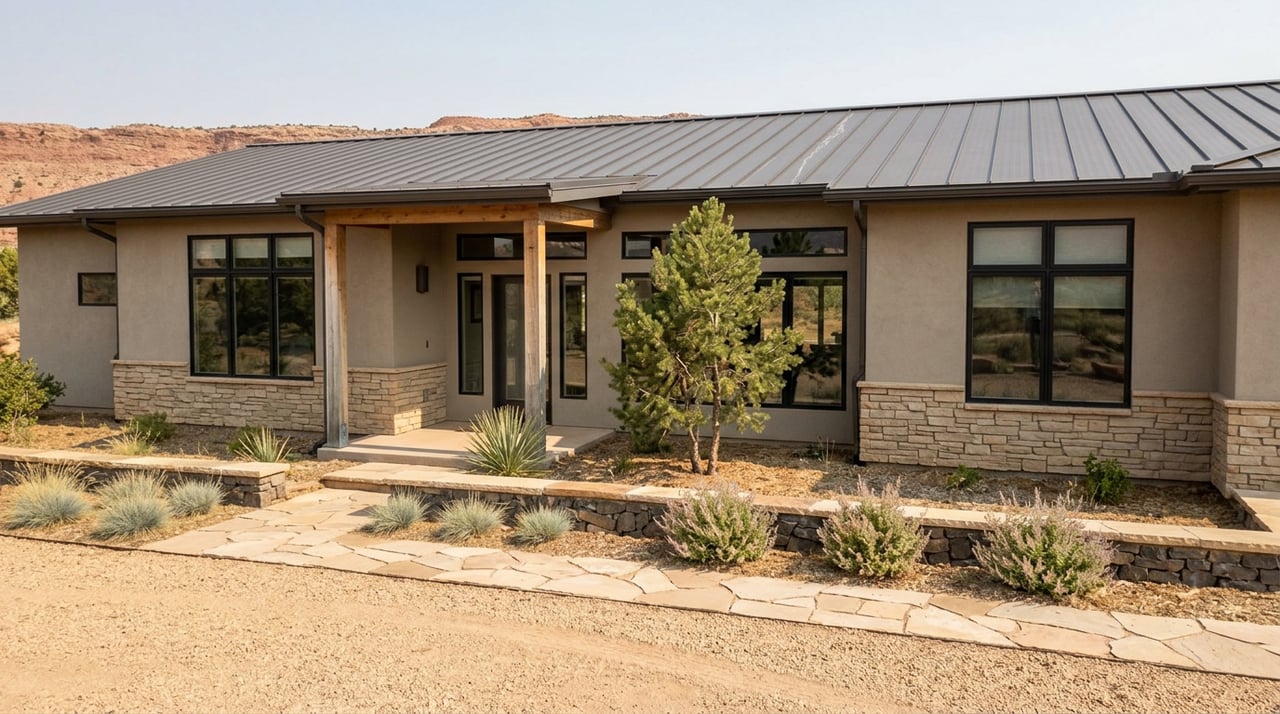
Part of the Redlands' premium comes from real, specific infrastructure: two golf courses that shape the value of everything built around them. Redlands Mesa Golf Course, designed by architect Jim Engh and opened in 2001, was ranked the 83rd-best course in the country and the top-ranked public course in Colorado by Golfweek's Best of 2024 list, ahead of Red Sky in Wolcott and the Broadmoor in Colorado Springs. It also spent years on Golf Digest's 100 Greatest Public Courses list, peaking at No. 17 nationally between 2005 and 2008. Tiara Rado Golf Course winds through a stretch of the Redlands that sits at the base of the Colorado National Monument, anchoring its own separate cluster of subdivisions.
Homes built around these two courses are not incidental to the neighborhood's price ceiling. They are the reason it exists. The Seasons at Tiara Rado, built out between 1990 and 2010, carries an active homeowners association whose dues cover common area maintenance and irrigation, a detail that matters because it tells you the HOA isn't decorative. It's paying a water bill on your behalf.
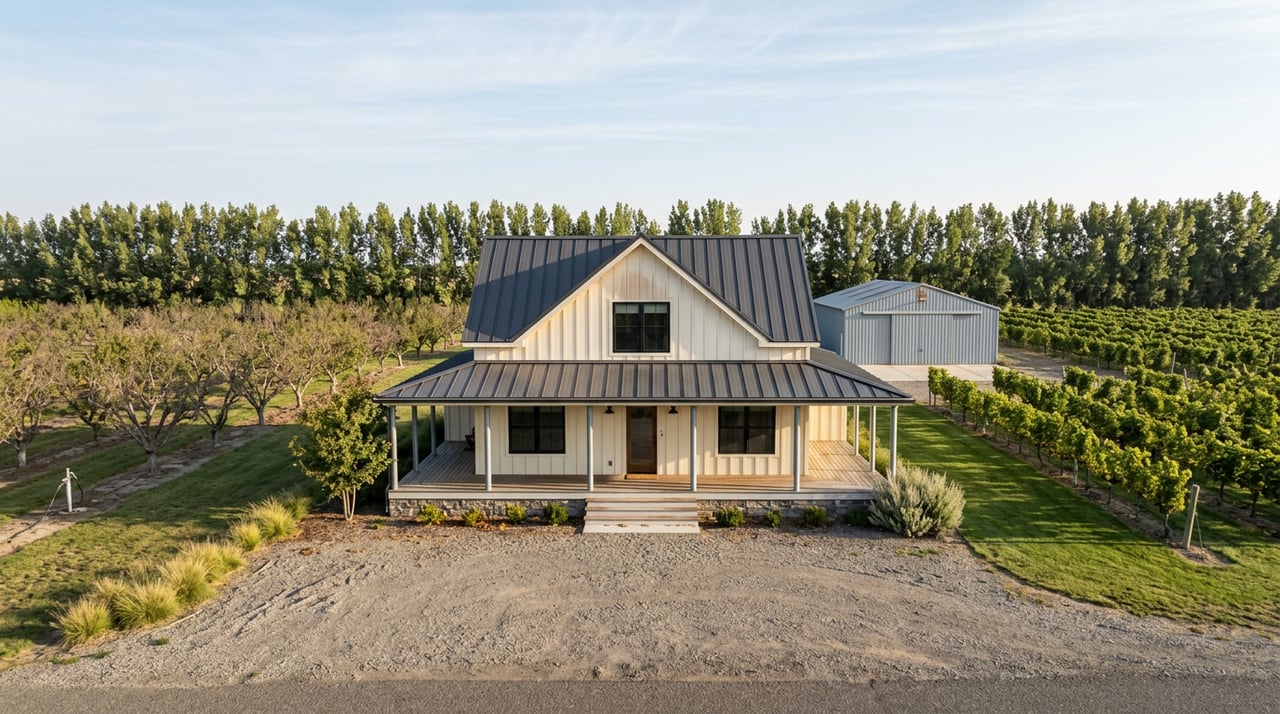
Newer subdivisions follow the same pattern. Monument Ridge Estates, a newer community in the Redlands, currently lists homes starting in the $820,000s on lots ranging from 0.19 to 0.35 acres. That is new construction pricing in 2026, and it sets the upper end of what "the Redlands" can mean on a given day.
What Granite Falls Actually Shows
If you want to see the golf-course product's appreciation in real numbers rather than a snapshot, look at Granite Falls, a 52-acre, 104-lot subdivision off South Camp Road that broke ground in 2018. The first filing priced its 31 lots from $118,000 to $123,900 apiece. By the summer of 2021, with a next filing of 24 lots underway, lot prices had climbed to a starting price of $134,900, and homes in the subdivision were starting in the low $500,000s.
That's the same subdivision, roughly three years apart, and it tells you how fast the new-construction corridor moved even before the pricing seen in today's Monument Ridge Estates listings.
| Community | Type | HOA | Price marker |
|---|---|---|---|
| Granite Falls (2018 launch) | New construction | Yes | Lots from $118,000-$123,900; homes from low $500,000s |
| Granite Falls (2021 filing) | New construction | Yes | Lots from $134,900; homes still starting low $500,000s |
| Monument Ridge Estates (current) | New construction | Yes | Homes starting in the $820,000s |
| The Seasons at Tiara Rado (1990-2010 build-out) | Golf course community | Yes, covers irrigation and common areas | Established resale market |
Read down that table and the trajectory of the golf-course and new-construction corridor becomes obvious. It has moved from entry-level custom pricing to a starting line north of $800,000 in less than a decade.
The Other Redlands
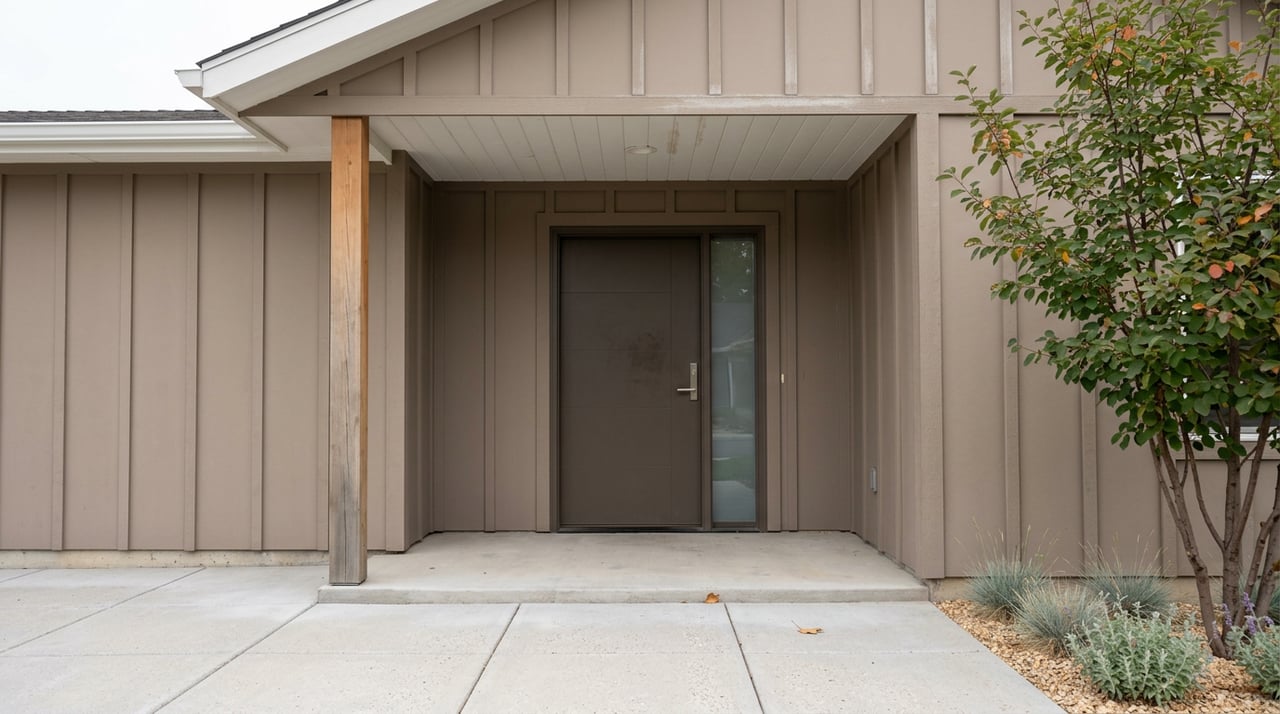
None of that describes the older, established pockets of the neighborhood, particularly along South Broadway, where homes built in the early 1980s are commonly marketed on one specific selling point: no HOA. A typical example is a two-story residence built in 1983, running roughly 2,826 square feet on a larger, more informal lot, with no association dues and no irrigation assessment attached to the deed.
That absence of an HOA isn't a minor footnote. It means no mandatory monthly payment, no architectural review committee, and no shared irrigation system to budget around. For a buyer who wants space and flexibility without recurring dues, that's the appeal. For a buyer trying to use the Redlands' $725,000 median to estimate what one of these homes should cost, it's a trap, because the median is being pulled upward by a completely different product built around golf frontage and planned-community amenities that this house doesn't have and was never priced against.
Why a Single Month's Median Can Lie to You
This is where the January 2026 paradox actually resolves. A median sale price only tells you something useful when enough transactions feed into it that one unusual sale can't swing the whole number. In a golf-course micro-neighborhood like Redlands Mesa, where the pool of homes that trade in any given month is small, that condition doesn't hold. One large custom home selling at a modest price per square foot, or one compact home selling at a premium per square foot, can drag the median in one direction while the per-square-foot figure moves in the other, simply because the mix of what sold changed, not because the underlying value of anything did.
That's exactly what a median down 22.6 percent alongside a price per square foot up 80.6 percent looks like from the outside. It's not a crash and it's not a boom. It's a small number of sales telling a story that only makes sense once you know how few data points are behind it.
The practical rule this leaves you with: before you treat any single-month median as a signal, ask how many homes actually closed to produce it. A citywide figure built on 377 sales, like Grand Junction's May 2026 number, is far more stable than a golf-course pocket's figure built on a handful of closings. When the sample is small, price per square foot within a specific product type, comparing golf-frontage new construction to other golf-frontage new construction, tells you more than the median ever will.
What This Means If You're Buying or Selling Here
- Ask your agent for the last six to twelve months of sales in the specific subdivision, not the zip code, before you anchor to a number.
- Separate comps by product type first. A no-HOA 1980s home off South Broadway and a new-construction lot in Monument Ridge Estates are not the same market even though they share a mailing address.
- Factor in HOA dues when they exist, especially where irrigation is bundled in, since that's a real recurring cost that a headline price doesn't capture.
- Treat any month with a handful of sales as noisy. Look for a trend across multiple months before you draw a conclusion from it.
- If you're selling a legacy no-HOA home, don't price off the neighborhood median. Price off homes with a similar build era, lot type, and absence of an association, because that's who's actually competing with you.
FAQ
Is the "Redlands median price" the same everywhere I see it quoted? No. Different sources draw the boundary differently, some at the zip code level (81507), others at a specific subdivision or golf-course pocket. Always check what geography a quoted median is actually describing before you compare it to another number.
Why do some Redlands homes have no HOA while others require mandatory dues? It comes down to when and how the subdivision was developed. Planned golf-course and new-construction communities are typically built with an HOA from the start, often to manage shared irrigation and common areas. Older, individually built homes from the 1980s generally predate that structure entirely.
Does a lower price per square foot always mean a better deal? Not on its own. Compare price per square foot only within the same product type and era. A legacy home's per-square-foot price and a new-construction golf-lot's per-square-foot price are measuring two different things, and putting them side by side tells you less than it looks like it does.
If you're trying to figure out which Redlands you're actually shopping in, or what your own home in one of these pockets is really worth against the right comps, that's the kind of local read a spreadsheet can't give you. Laura Black has spent nearly 20 years pricing property across the Grand Valley's different pockets, and she'd rather walk you through the real comps than let a blended median make the decision for you. Schedule a consultation to talk through your specific address, your specific product type, and what it's actually worth right now.