Drive C ½ Road up onto the Mesa this week and you will pass two harvests happening in the same field. Peach bins are still coming out of the orchard blocks, stacked at the ends of rows waiting for a truck. A few dozen yards over, in the vine rows that run alongside those same orchards, pickers are starting to move through the grapes. Nobody up here treats this as a coincidence, because it isn't one. It is the result of a deal cut decades ago that still shapes how this neighborhood looks and how its calendar runs.
That deal is worth knowing if you live here, because it explains something most visitors never figure out: why the wineries on this Mesa are working farms first and tasting rooms second, and why the next six weeks look the way they do.
Why the vines and the orchards share a fence line
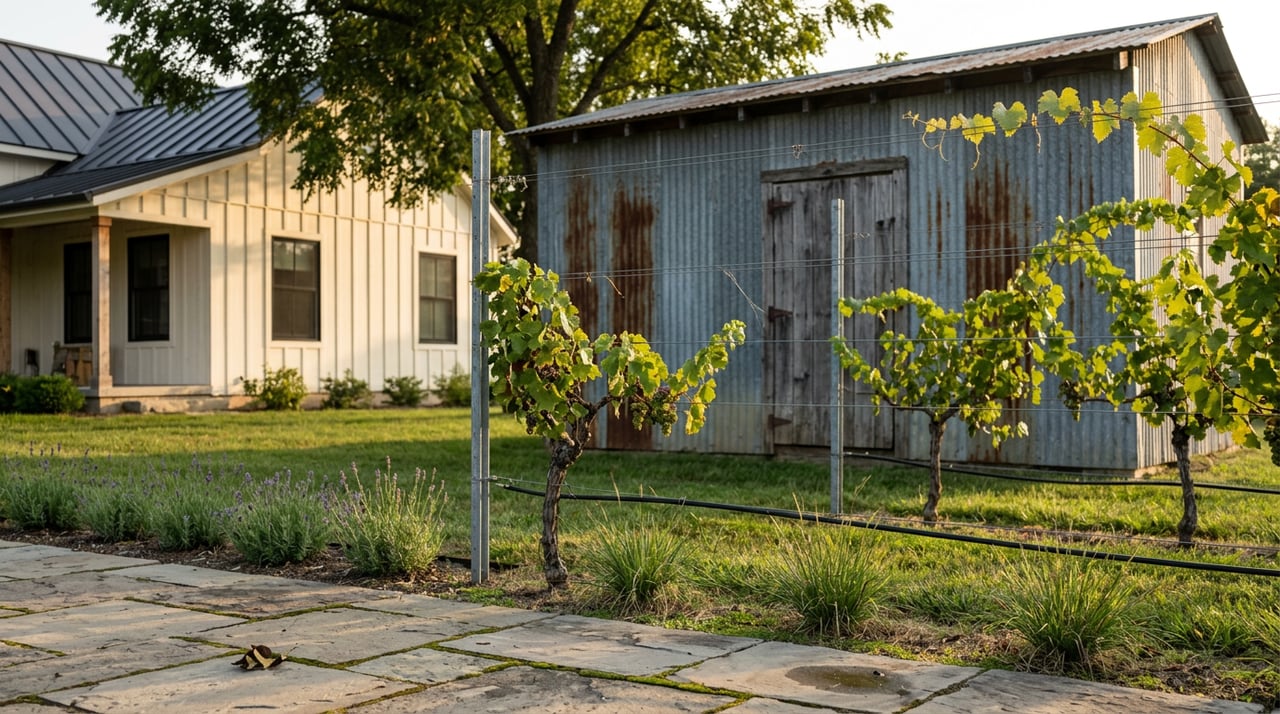
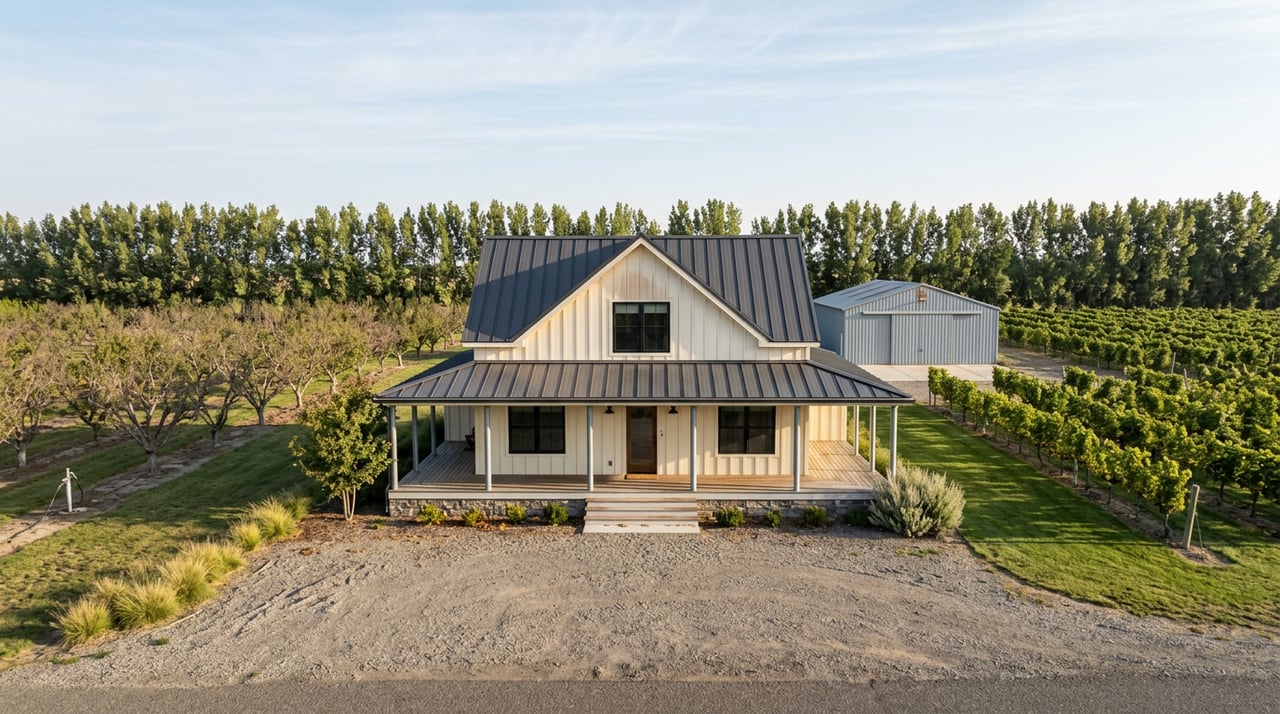
Restoration Vineyards describes its own ten acres as sitting inside peach and cherry orchards, and that is not marketing language. It is the layout of most of the Mesa. The reason traces back to the 1980s, when the Grand Valley's apple industry largely collapsed and growers needed something else to plant. Plum Creek Cellars, the winery that eventually became Colterris, approached Talbott Farms with an offer: grow wine grapes, and Plum Creek would send a viticulturist, commit to a set volume, and pay a fair price. The arrangement worked for a reason that still holds today. Peaches are a summer crop, picked from mid-July into September. Grapes come in between September and October. Planting both means the same crew and the same equipment stay busy almost straight through, instead of sitting idle for half the year waiting on one crop.
That is why, right now, at the tail end of peach season, you can watch grape harvest start almost without a pause in between. It is also why the vineyards on the Mesa look the way they do, tucked between orchard blocks rather than laid out in isolated vineyard tracts the way you would see in Napa or Sonoma.
The timing lines up with how the broader Grand Valley AVA works. Bud break happens in late April, and the growing season runs long enough that harvest across the valley typically finishes in October. Grand Valley accounts for the large majority of Colorado's wine grape acreage, so what happens here through the next month is not a local curiosity. It is most of the state's wine harvest playing out in real time on your street.
What that means for your next few weekends
Harvest pulls labor toward the vines and away from the tasting counter, which shows up in small, practical ways if you know to look for it. A few things worth planning around:
- Restoration Vineyards is running its full 2026 season, open Monday through Thursday from 11:30 a.m. to 7 p.m. and Friday through Sunday from 11:30 a.m. to 5 p.m. The lineup already booked for the rest of the season includes acts like Zolopht, the Tyler Rust Band, Katie & The Players, and Double Yellow Line, so weekend live music is continuing even as harvest work ramps up on weekdays.
- Carboy Winery at Mt. Garfield Estate runs its annual Dine in the Vines pairing dinner in mid-September. Executive Chef Scott Hybbeneth prepares five courses paired with unreleased and library vintages of Carboy's Grand Valley wines. It is the kind of event that sells out early, so if you have been meaning to go, now is the time to check their calendar for this year's date.
- Carlson Vineyards, at mile marker 6 on the Fruit & Wine Scenic Byway, keeps its shady garden seating open through harvest. It is the third-oldest winery in the state, and the resident cats that wander the property are as much a fixture as the wine list.
- Colterris, the 190-acre estate above town, had its Petit Verdot and its Malbec singled out for high marks in a Colorado tasting report published this July. If you have been meaning to try either, harvest season is when the winery is busiest but also when the current vintage conversation is liveliest.
None of these businesses close down for harvest. They just shift where the energy goes. Weekday afternoons get quieter because crews are in the field. Weekend evenings stay full because that is when the valley actually gathers.
The byway you are already driving
If you commute along the Fruit and Wine Byway, you are passing the same farms that show up on every visitor's must-see list, except you are seeing them mid-shift rather than mid-photo-op. Alida's Fruits and Anita's Pantry keep their stands stocked with whatever is coming off the trees and vines that week. Talbott's Farm Market and Taproom, which has run Comedy Night and Taco Tuesdays alongside its cider and wine sales, is a reminder that the farms up here have always doubled as gathering spots, not just production sites.
That dual identity is easy to miss if you only think of East Orchard Mesa as a backdrop. The people running these operations are managing labor, weather, and market timing across two crops at once, right now, this week. The tasting room is often the smallest part of what they are doing in September.
Why this is worth ten minutes of your Saturday
There is a real difference between visiting wine country and living inside a working one. Visitors get the polished version: a flight, a view, maybe a band. Living here means you get to watch the actual mechanics, the reason the rows are laid out the way they are, the reason a farm that sells peaches in July is picking grapes in September on the same ground.
That mechanism is not something you will find explained on a brochure or a festival flyer. It is the kind of detail that comes from paying attention to a place over years, not weeks. The Talbott family's answer to a collapsing apple market forty years ago is still the reason your Saturday drive up the Mesa smells like two different harvests at once.
If you already live here, none of this changes your day-to-day plans much beyond picking which weekend event to catch. But it is worth knowing the next time someone asks what makes this stretch of the valley different from the vineyard-only regions people compare it to. The answer is that it was never vineyard-only to begin with. It was orchard land that added a second crop because the timing worked, and that decision is still visible in every row you pass this month.
If you are weighing a move to this Mesa, or you already call it home and have questions about how land, water, and orchard or vineyard acreage actually work here, I have spent years farming this ground myself and helping neighbors sort through exactly these questions. Reach out to Laura Black when you are ready to talk it through.