If you picture East Orchard Mesa as a quiet place to spread out, you are not wrong. But small-acreage living here is not the same as buying a larger lot in a suburban area. You are stepping into a working agricultural landscape with its own rules, rhythms, and responsibilities. This guide will help you understand what daily life, land stewardship, and property due diligence can look like before you buy. Let’s dive in.
East Orchard Mesa Is Agricultural First
East Orchard Mesa is shaped by agriculture, not suburban growth. Mesa County’s EOM 10 future land-use classification was created to preserve fruit and vineyard production, and it sets a 10-acre minimum lot size for new development.
In practical terms, that means the area is intended to remain distinctly rural and agricultural. The county describes East Orchard Mesa and nearby Palisade as known for the soils and microclimate that support vineyards and orchard crops.
If you are looking at a home on a few acres here, it helps to adjust expectations early. You may enjoy open views, more privacy, and fewer nearby homes, but you should also expect irrigation features, seasonal farm activity, and land-use limits that are different from a typical residential neighborhood.
What the setting feels like
East Orchard Mesa generally includes the area south of the Colorado River, east of 35 Road, west of 38 1/4 Road, and north of C Road. It sits within the broader agricultural corridor that shapes the Palisade area, about 10 miles east of Grand Junction.
That location creates an appealing balance for many buyers. You can have a rural setting while still staying connected to the larger Grand Valley for errands, services, and recreation.
Small Acreage Means Ongoing Stewardship
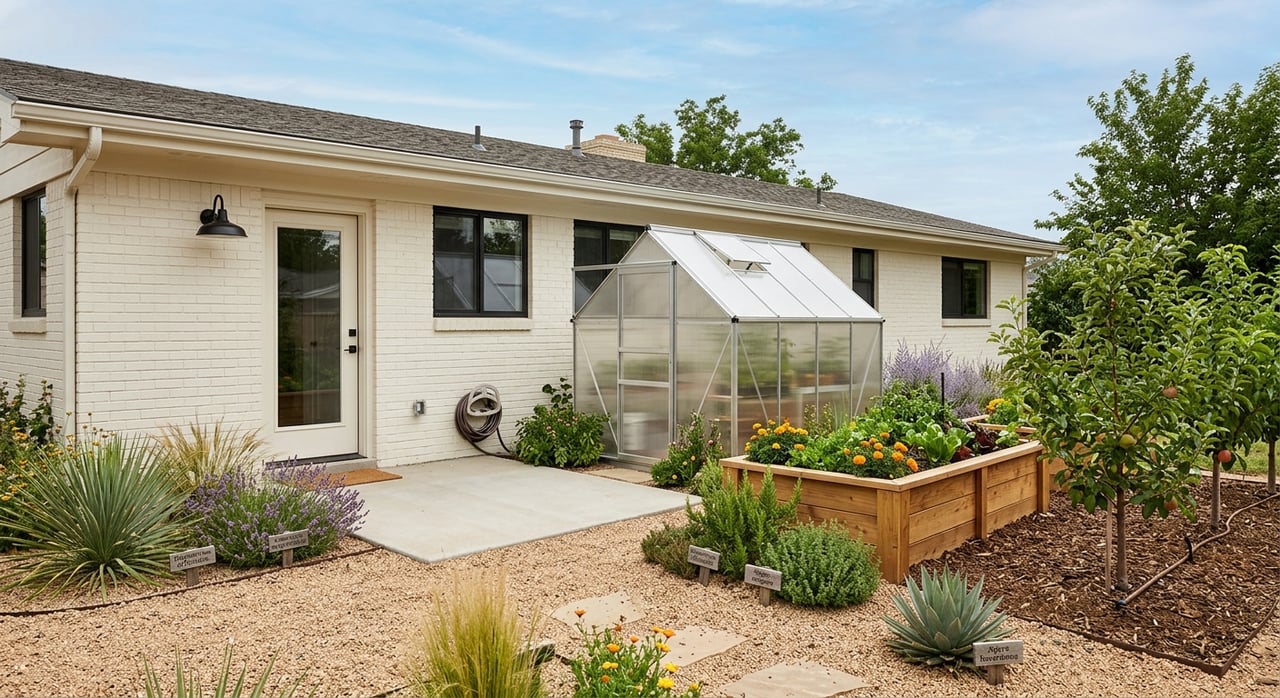
One of the biggest surprises for buyers is that the land usually asks for attention all year. East Orchard Mesa is well suited for people who want space and scenery, but ownership often includes active care of soil, water, vegetation, fencing, and irrigation.
Colorado State University Extension frames small-acreage ownership in Western Colorado as hands-on management. That can include everything from watering and drainage to plant care, wildlife issues, and fence maintenance.
If the property includes fruit trees, vines, or room for future planting, that responsibility becomes even more seasonal. In this area, land ownership often feels more like stewardship than simple yard care.
The climate shapes the workload
Palisade’s climate helps explain why maintenance matters. NOAA normals for 1991 through 2020 show hot, dry summers and cold winters, with average highs ranging from 38.7°F in January to 92.5°F in July and annual precipitation of about 10.47 inches.
That dry pattern affects how you think about watering, planting, and winter care. CSU Extension notes that newly planted trees in Colorado need careful watering, including winter watering on sunny days when temperatures are above 40°F and the ground is not frozen.
Pruning also follows a local calendar. For fruit trees, CSU says late winter is typically the time for pruning, after the risk of extreme cold but before buds begin to swell.
Pest and orchard timing are local
If your property includes stone fruit or you plan to plant it, local pest timing matters. CSU guidance for backyard orchards notes that peach twig borer is common in Western Colorado, and oriental fruit moth is mainly limited to the Palisade and East Orchard Mesa area.
That matters because treatment often depends on timing around bloom, dormancy, or early fruit development. Even for hobby-scale growing, local conditions can influence what care is needed and when.
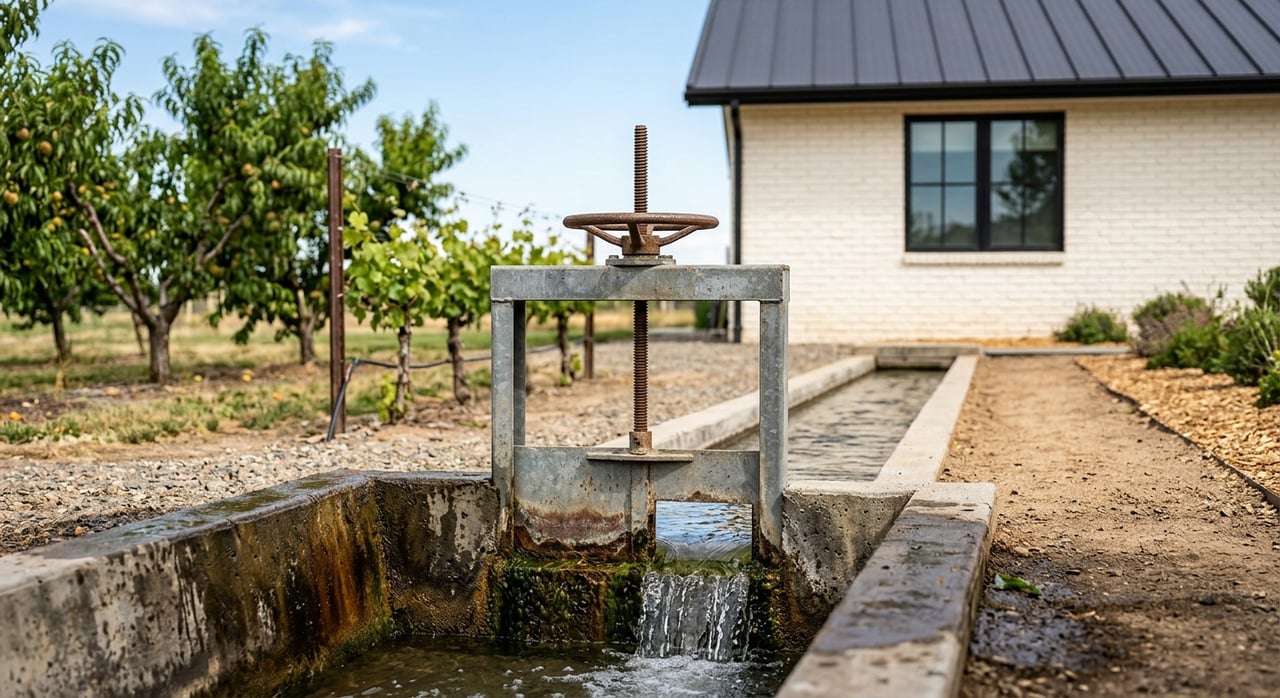
Irrigation Is Central to Ownership
On East Orchard Mesa, irrigation is not a side issue. It is one of the first things you should understand when evaluating a property.
The Palisade Irrigation District says the water rights for land within the district are attached to the land and are not transferable. Each parcel receives a proportional share, and the district notes that rotation may be necessary because there is not enough water for everyone to irrigate at the same time.
That means you should not assume unlimited on-demand irrigation. A property may have access to irrigation water, but how that water is delivered and scheduled can affect daily use and long-term land care.
What buyers should verify about irrigation
Before you buy, it is smart to clarify how irrigation works on that specific parcel. Key questions include:
- Is the parcel within the Palisade Irrigation District?
- How is water delivered to the property?
- Is irrigation rotation part of normal use?
- Are the laterals district-maintained or owner-maintained?
- Are there open ditches on the property, and who is responsible for them?
According to the district, water is generally turned into the Price Ditch during the first two weeks of April and turned off during the last week of October. The district also states that open ditches are the responsibility of the people who use them, while some laterals are district-maintained and others remain owner-maintained.
For many buyers, this is one of the most important lifestyle realities to understand. Irrigation access can be a major asset, but it also comes with scheduling, maintenance, and practical responsibilities.
Soil and Water Management Matter
Western Colorado’s growing conditions can be productive, but they are not effortless. CSU notes that salts are a limiting factor in Western Colorado valleys, including the Grand Valley, and that irrigation and drainage practices can affect salt buildup and crop growth.
For a small-acreage owner, this means water management is tied directly to land health. Over time, how you irrigate, drain, and maintain the property can influence what grows well and how usable different parts of the land remain.
This is one reason East Orchard Mesa purchases benefit from a detailed, property-specific review. Two parcels can look similar from the road while functioning very differently when it comes to irrigation setup, drainage, and long-term upkeep.
Agricultural Classification Is About Use
A common question is whether a parcel is truly agricultural land or simply rural residential land with more space. In Mesa County, agricultural classification depends on actual use, not zoning alone.
The county says agricultural land can include land used as a farm or ranch, land under the residence and support buildings if they are part of the operation, and parcels with decreed water rights used for agricultural production.
For buyers, the main takeaway is simple. You should not assume that a property is agriculturally classified just because it looks rural or includes acreage. The actual use of the land matters.
Outbuildings and Hobby Uses Need Verification
Many small-acreage buyers want room for a barn, shop, equipment storage, or hobby-farm setup. That may be possible, but it should always be verified against county rules for the specific parcel.
Mesa County’s Land Development Code allows one accessory structure without a residence on rural parcels that are at least one acre. The code does not apply that same limitation to properties with an agricultural principal use when barns or outbuildings are clearly related to that use.
Even so, setback and easement rules still apply. That is why buyers should confirm what is currently allowed before making plans based on assumptions.
If you plan to keep livestock
The same caution applies if you are considering domestic livestock as part of a hobby-farm setup. Mesa County treats domestic livestock as an accessory use, so buyers should verify whether fencing, corrals, barns, and animal areas fit the zoning and setback standards for that property.
This does not mean a property will not work for your plans. It means the details matter, and those details are worth checking before you close.
Burn Rules and Seasonal Cleanup Matter
Land cleanup on small acreage often involves branches, trimmings, and plant waste. In Mesa County, burn rules differ depending on whether the activity is agricultural or residential.
Mesa County allows agricultural burn-permit holders outside Grand Junction to burn year-round. Residential burn permits are limited to the county’s spring and fall open-burn seasons, and burning can still be restricted by no-burn advisories.
If your property has orchards, windbreaks, or a lot of seasonal trimming, this is worth understanding up front. Cleanup methods and timing can affect how you plan maintenance throughout the year.
Wildfire Risk Should Be Part of Due Diligence
East Orchard Mesa’s views and mesa-top setting are part of the draw, but they also come with risk considerations. Mesa County’s wildfire planning describes East Orchard Mesa as a high-risk area, with homes on the mesa top above thick brush fuels.
The county recommends defensible space, fuel reduction along the mesa edge, and careful management of combustible decks and fences. If you are buying here, wildfire readiness should be part of how you evaluate both the house and the land.
There is also a second layer to consider. Mesa County notes that wildfire can increase flood risk because burned vegetation and soils can repel water, while steep slopes can move runoff faster.
A practical risk checklist
When you walk a property, it helps to look beyond the home itself. Consider asking about:
- Defensible space around the house
- Brush or fuel buildup near the mesa edge
- Deck and fence materials
- Drainage patterns on sloped areas
- Erosion concerns after heavy runoff events
- Access for maintenance and emergency response
These are not reasons to avoid East Orchard Mesa. They are reasons to approach a purchase with clear eyes and solid local guidance.
Rural Feel, But Not Cut Off
Even with its agricultural character, East Orchard Mesa is not isolated. Grand Valley Transit serves Palisade and parts of unincorporated Mesa County, and the One Riverfront Trail system connects Palisade, Grand Junction, and Fruita.
That mix is part of the appeal for many buyers. You can live among orchards and open space while staying within reach of town services, commuting routes, and outdoor recreation.
Who East Orchard Mesa Fits Best
Small-acreage living on East Orchard Mesa tends to work best if you want both space and responsibility. The setting can be a great fit if you value privacy, views, and a strong sense of place, and you are comfortable treating irrigation, upkeep, and land-use diligence as part of ownership.
It may be less ideal if you want a low-maintenance property with simple utility systems and few seasonal tasks. Here, the lifestyle is tied closely to the land.
That is also what makes buying here different from buying in a more typical residential area. Value is not just about square footage or finishes. It is also about irrigation setup, actual land use, outbuilding potential, maintenance demands, and how the property fits your goals.
If you are exploring East Orchard Mesa, the smartest next step is a property-specific conversation about water, land use, and what day-to-day ownership would really look like. For grounded local guidance on Palisade and East Orchard Mesa acreage, connect with Laura Black.
FAQs
What is small-acreage living like on East Orchard Mesa?
- Small-acreage living on East Orchard Mesa usually means living in a rural agricultural setting with open space, irrigation infrastructure, seasonal farm activity, and more hands-on land care than a typical residential lot.
Is East Orchard Mesa considered agricultural land or rural residential land?
- East Orchard Mesa is planned as an agricultural area, but whether a specific parcel is agriculturally classified depends on its actual use, not zoning alone.
How does irrigation work on East Orchard Mesa properties?
- In the Palisade Irrigation District, water rights are attached to the land, parcels receive a proportional share, rotation may be necessary, and maintenance responsibility can vary between the district and the property owner.
Can you build a barn or shop on an East Orchard Mesa property?
- Possibly, but buyers should verify county rules for that parcel because accessory structures must comply with applicable setback and easement requirements, and different standards can apply depending on the property’s use.
What should buyers know about orchard or fruit-tree maintenance in East Orchard Mesa?
- Buyers should expect seasonal tasks such as irrigation scheduling, winter watering for new trees, late-winter pruning, and pest management that follows local timing in the Palisade and East Orchard Mesa area.
Is wildfire risk a concern for East Orchard Mesa homes?
- Yes, Mesa County identifies East Orchard Mesa as a high-risk wildfire area, so buyers should pay attention to defensible space, fuel reduction, drainage, and overall site conditions.
Are East Orchard Mesa properties far from town services?
- No, the area has a rural feel, but it remains connected to the broader Grand Valley through transit service in the Palisade area and regional trail connections to nearby communities.