If you are buying on East Orchard Mesa, water is not a side detail. It can shape how you use the land, what it costs to own, and whether your plans are realistic in the first place. A little clarity up front can save you from big surprises later, so let’s walk through the irrigation and water basics you should understand before you buy.
Why irrigation matters on East Orchard Mesa
East Orchard Mesa sits in a dry, agriculture-driven part of the Grand Valley. The area gets just over 8 inches of precipitation a year, and the growing season is about 190 days. That is a big reason irrigation is so central here.
In practical terms, irrigation often determines whether land can support orchard use, vineyards, hay production, or irrigated residential acreage. If you are buying anything beyond a standard in-town lot, water access is usually a core due-diligence item. It is not something you want to sort out after you are already emotionally committed to the property.
The broader Grand Valley irrigation system serves about 85,000 acres through six major providers. East Orchard Mesa is part of that larger water landscape, and nearby properties may be served by different entities even when they seem close together. That is why two similar-looking parcels can have very different water setups.
How water delivery works here
The Grand Valley Project connection
A lot of East Orchard Mesa irrigation traces back to the Grand Valley Project. Colorado River water is diverted through the regional system, then carried through major infrastructure that ultimately serves Orchard Mesa users.
For Orchard Mesa specifically, water moves through the Orchard Mesa Siphon under the Colorado River and into the Orchard Mesa Power Canal and Pumping Plant. From there, it is lifted into Orchard Mesa Canals No. 1 and No. 2 for delivery. If that sounds complicated, it is, and it is one reason local knowledge matters when you are evaluating land.
Ditches, laterals, and pipelines
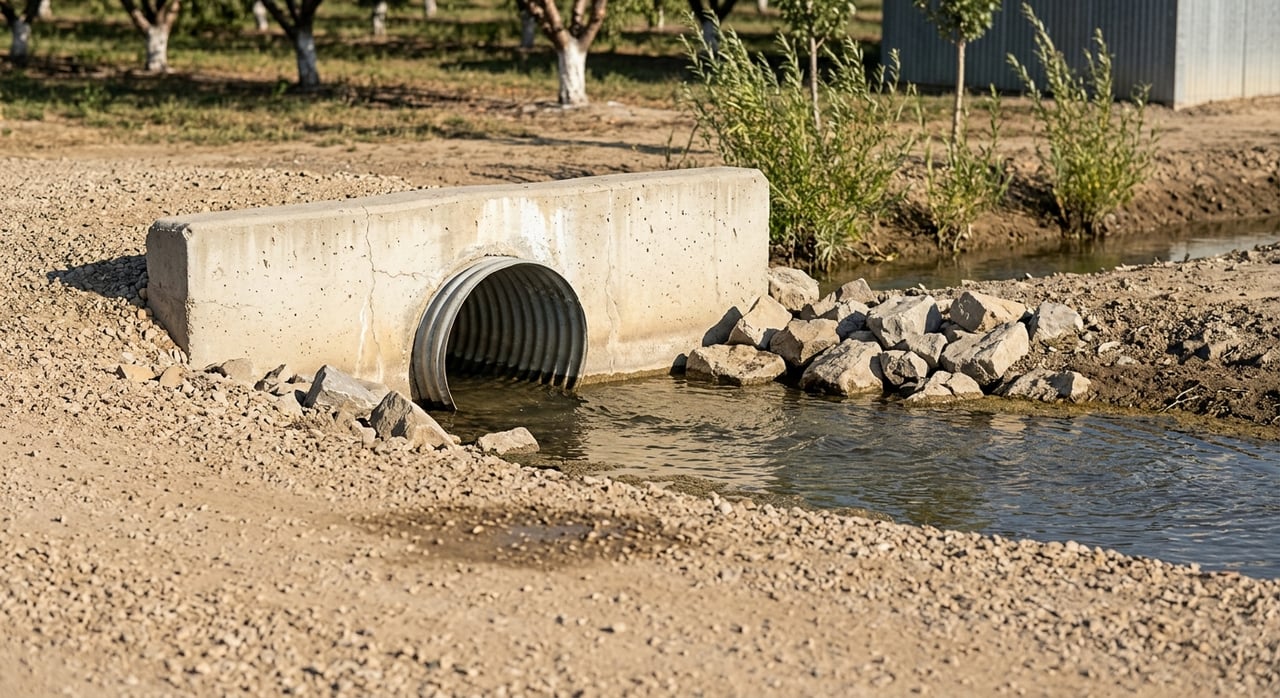
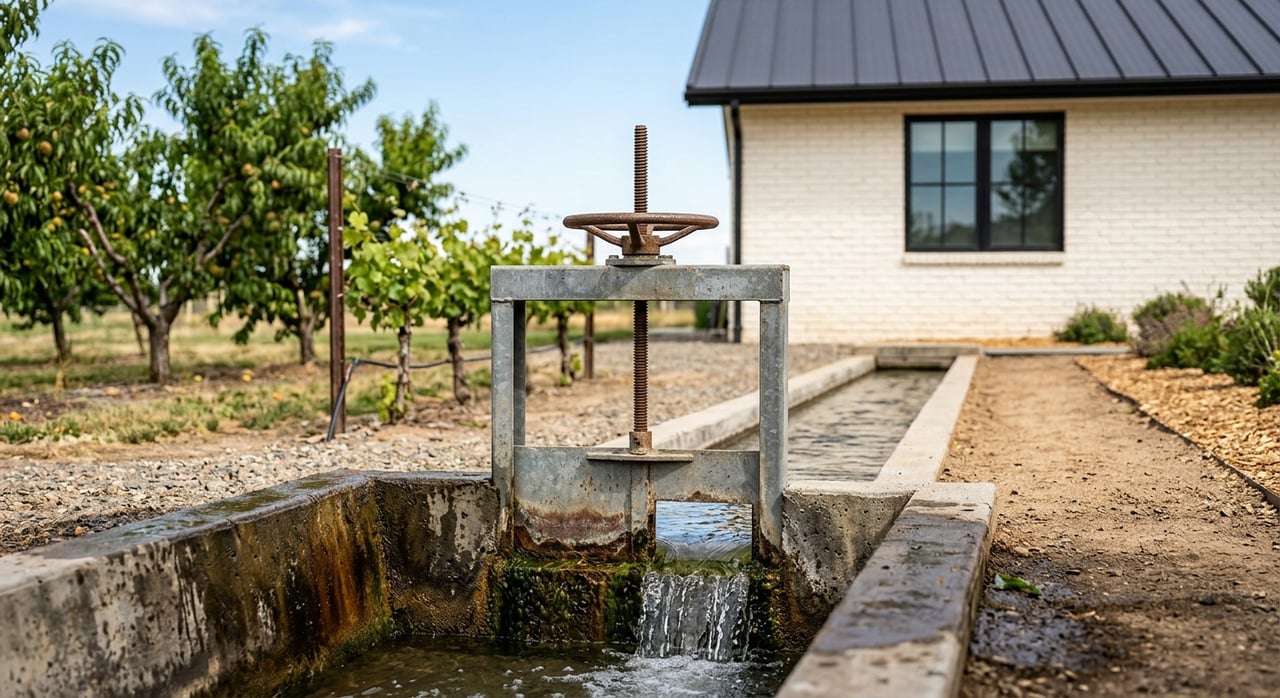
You will still see a mix of open ditches, turnouts, laterals, and pumping infrastructure on East Orchard Mesa. In some areas, parts of the system have been converted to pipelines as development has increased. That means the physical delivery method can vary from parcel to parcel.
Orchard Mesa Irrigation District says most of its system is still open channel, though some laterals have been converted to pipeline. Reclamation also announced funding in 2025 for OMID to convert 8.4 miles of open canals into pressurized pipelines and add upgraded flow meters. So, the system is evolving, but many properties still depend on traditional irrigation infrastructure.
OMID is important, but not the only provider
Many buyers on East Orchard Mesa will hear about Orchard Mesa Irrigation District, or OMID. It serves lands east of Palisade and operates as part of the Grand Valley Project. But it is not the only possible provider in the area.
Nearby parcels may instead be tied to Mesa County Irrigation District, Palisade Irrigation District, another provider, or a private well. Even when districts share the same broader water source, their rules, records, and delivery systems can differ. That is why you should confirm the serving entity for the exact parcel, not just assume based on location.
Water rights are not always structured the same way
Colorado basics
Colorado water law follows prior appropriation. In simple terms, senior rights are generally first in line in times of shortage, and the value of a water right depends on its amount, availability, and priority date.
That matters because not all water access has the same reliability or practical value. Annual runoff and snowpack can also affect how much water is delivered in a given season. So when a property is described as having irrigation, the next question should be, what kind, through whom, and how is it documented?
Why OMID can confuse buyers
OMID works differently from many mutual ditch companies. According to the district, its water rights are owned by OMID and allocated to the land, rather than sold separately from the land.
OMID also says it does not use water shares. Instead, it uses water-right acres. If you are coming from another part of Colorado and are used to hearing about ditch shares, that difference is important. The wording may sound small, but it can affect how you verify what is actually tied to the property.
What water access can affect
Land use
Water access can directly affect what a property can realistically support. That may include orchards, vineyards, hay ground, other irrigated crops, or simple acreage maintenance for residential use.
If you are dreaming about rows of fruit trees, a hobby vineyard, pasture, or even just keeping a few acres green, you need to know whether the available water setup matches that goal. A beautiful parcel is not the same thing as a functional parcel.
Carrying costs
Water also comes with ownership costs. OMID says irrigation assessments are collected through Mesa County property taxes and help cover operation, maintenance, replacement, and loan repayment.
For buyers, this means the cost of owning irrigated land is not just the mortgage, taxes, and insurance. You also want to understand any irrigation-related assessments and whether there are maintenance responsibilities tied to private laterals or smaller delivery systems.
Property value
Reliable irrigation can materially affect how buyers view a parcel. In a dry climate, water availability often has a direct connection to usability and long-term value.
That does not mean every irrigated property is equal. The amount of water, how it is delivered, the priority and availability behind it, and the yearly cost structure all matter. Those details can influence how a property should be priced and how you should evaluate it.
Agricultural classification questions
If you are buying land with agricultural goals in mind, water can also matter for agricultural classification. Mesa County’s agricultural questionnaire asks about irrigation or water rights, how many acres they serve, the water source, and what crops are being cultivated.
The county also notes that agricultural classification is for valuation, not zoning, and that agricultural status can take three years to establish. So if tax treatment is part of your long-term plan, it is smart to understand how irrigation fits into that picture early.
Who maintains what matters
One of the most practical questions for buyers is where district responsibility ends and private responsibility begins. CSU Extension explains that ditch companies usually maintain the main ditch system up to the point where landowners or lateral associations take over smaller systems.
That can affect both your costs and your day-to-day ownership experience. If a lateral, ditch, gate, or pipeline crosses the property, you will want to know who maintains it, who can access it, and whether any private association rules apply.
There is also an access issue many buyers overlook. GVWUA states that canals, ditches, banks, roads, gates, and related irrigation facilities are private property, not public recreation corridors. So if irrigation infrastructure runs across or near the parcel, it is worth understanding exactly how that land is used and accessed.
What to verify before you make an offer
Water due diligence should happen early. Colorado’s standard residential contract includes a water-rights examination deadline and specific well-rights and water-stock sections, which is a good reminder that these questions should not wait until the last minute.
Here is a practical checklist to use when you are considering an East Orchard Mesa property:
- Confirm the exact water provider for the parcel.
- Ask for written proof of the water entitlement tied to the land.
- Review district account status and any irrigation assessments.
- Verify whether the property uses water-right acres, shares, or another structure.
- Identify any ditches, pipelines, laterals, or turnouts on the property.
- Clarify who maintains each part of the system.
- Ask about access easements and any private association involvement.
- If a well is involved, review the Division of Water Resources permit file and available construction records.
- If the land is vacant or intended for future planting, confirm that the water setup supports your intended use.
A simple way to think about it
When you buy on East Orchard Mesa, the key question is not just, “Does this property have water?” The better question is, “Who delivers it, how is it documented, how does it reach the land, who maintains the system, and what will it cost me each year?”
That is the mindset that helps you buy with confidence. It keeps you focused on facts instead of assumptions, which is especially important when land value is tied to irrigation and long-term use.
If you are looking at East Orchard Mesa property and want a grounded read on how irrigation, land use, and local due diligence can affect value, Laura Black can help you sort through the practical questions before you commit.
FAQs
What makes irrigation so important for East Orchard Mesa property buyers?
- East Orchard Mesa is in a dry part of the Grand Valley with just over 8 inches of annual precipitation, so irrigation is often essential for agricultural use and many acreage properties.
How do Orchard Mesa Irrigation District water rights work?
- OMID says its water rights are owned by the district and allocated to the land, and it uses water-right acres rather than water shares.
What should you verify about water before buying land in East Orchard Mesa?
- You should confirm the exact water provider, obtain written proof of the water entitlement, review assessments, and clarify maintenance and access responsibilities for any irrigation infrastructure.
Can a well replace irrigation water on an East Orchard Mesa property?
- If a property depends on a well, you should review the Colorado Division of Water Resources permit file and available construction records rather than assume the well supports your intended use.
Do irrigation costs show up in property ownership expenses on East Orchard Mesa?
- Yes, OMID says irrigation assessments are collected through Mesa County property taxes and help pay for operation, maintenance, replacement, and loan repayment.
Does irrigation affect agricultural classification in Mesa County?
- Yes, Mesa County’s agricultural questionnaire asks about irrigation or water rights, acres served, water source, and crops, and the county notes that agricultural classification is for valuation rather than zoning.